
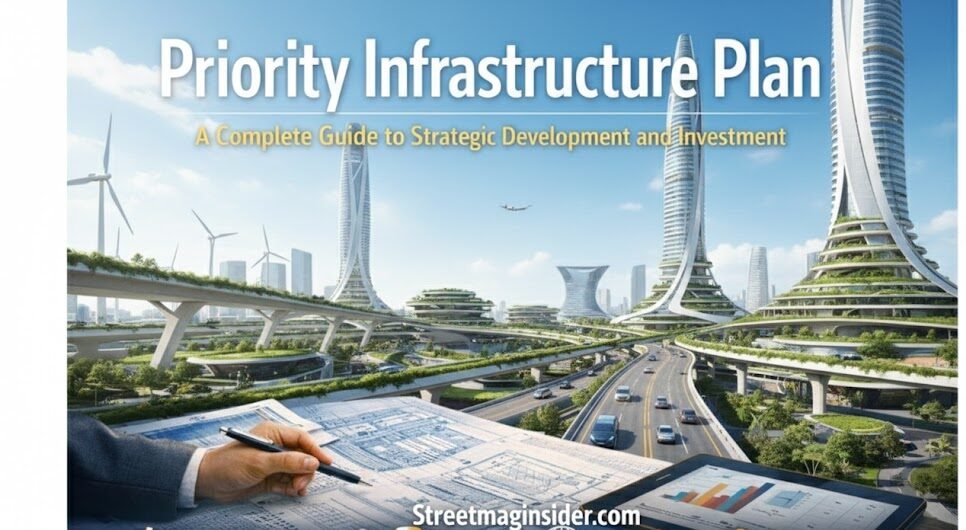
A Priority Infrastructure Plan (PIP) is a strategic roadmap governments use to prioritize, fund, and implement critical infrastructure projects. It ensures efficient resource allocation, stimulates economic growth, attracts private investment, and supports sustainable development. By focusing on transport, energy, water, digital networks, and social infrastructure, PIPs enhance productivity, quality of life, and regional equity.
The Priority Infrastructure Plan 2026 is a comprehensive framework guiding nations in planning and implementing essential infrastructure projects. It combines strategic vision, project prioritization, funding mechanisms, and governance to maximize economic, social, and environmental benefits. By covering sectors like transportation, energy, water, digital networks, and social infrastructure, it fosters sustainable growth, attracts investment, creates jobs, and ensures equitable access to services. This plan also incorporates future trends like smart cities, climate resilience, and green energy, making it a cornerstone for long-term national development.
Understanding Priority Infrastructure Plans: Definition and Core Purpose
A Priority Infrastructure Plan (PIP) is a strategic document that identifies, prioritizes, and guides the implementation of infrastructure projects critical to a nation’s economic and social development. Its purpose is to align short-term budgets with long-term strategic goals, ensuring limited resources are efficiently used. PIPs define which sectors—like transportation, energy, and digital networks—require urgent attention. By establishing clear objectives and timelines, a PIP helps governments plan for economic productivity, regional equity, and sustainable growth. For example, countries like Australia and Singapore have leveraged PIPs to coordinate major urban and regional infrastructure investments, ensuring maximum impact and public benefit.
Why a Priority Infrastructure Plan Is Vital for National Growth
Infrastructure underpins modern societies, enabling trade, mobility, and energy supply. A PIP ensures governments invest strategically rather than reactively. Without a plan, resources may be wasted on low-priority projects, slowing economic growth. By focusing on high-impact projects, a PIP stimulates productivity, creates jobs, and attracts private investors. For instance, the European Union’s 2020 infrastructure roadmap demonstrated that targeted investment in transport and energy networks boosted GDP by 1.2% annually in several member states. Ultimately, PIPs serve as a foundation for sustainable growth and long-term national competitiveness.
Key Benefits of a Well-Structured Infrastructure Strategy
A robust PIP provides economic, social, and environmental benefits. Economically, it drives investment and innovation while improving productivity. Socially, it ensures equitable access to education, healthcare, and mobility. Environmentally, it supports sustainable solutions like renewable energy or low-carbon transport. A 2021 World Bank report highlighted that countries with clear infrastructure prioritization plans experienced up to 20% higher efficiency in public spending. Additionally, long-term planning reduces project delays, cost overruns, and environmental risks, making PIPs a smart governance tool.
How Priority Infrastructure Plans Improve Economic Productivity
Economic productivity is enhanced when infrastructure bottlenecks are addressed systematically. Efficient transport networks reduce commute times and supply chain costs. Reliable power and water systems enable businesses to operate consistently. Digital infrastructure increases connectivity, enabling e-commerce, remote work, and innovation. For instance, South Korea’s PIP for digital networks accelerated nationwide broadband access, increasing tech sector output by 15% in five years. By targeting high-impact projects, PIPs create an environment where businesses thrive, labor markets expand, and national GDP grows steadily.
Core Components of a Successful Priority Infrastructure Plan
A successful PIP typically includes a strategic vision, project identification, prioritization, funding mechanisms, implementation timelines, and governance frameworks. Strategic vision sets long-term goals. Project identification assesses needs across sectors. Prioritization ranks projects based on economic, social, and environmental impact. Funding strategies combine public budgets, private investment, and loans. Implementation timelines ensure milestones are achievable. Governance ensures transparency, accountability, and public trust. Together, these components form a roadmap for delivering infrastructure projects efficiently and sustainably.
Identifying and Prioritizing Infrastructure Projects Effectively
Project prioritization involves evaluating urgency, impact, feasibility, and cost-benefit ratios. Governments use data analysis, gap assessments, and stakeholder consultations to determine priorities. High-priority projects typically address bottlenecks affecting large populations or critical industries. For example, India’s national infrastructure pipeline ranks projects by economic impact, regional need, and alignment with sustainable development goals. By selecting the right projects, PIPs ensure funds are directed toward investments that yield maximum returns and long-term societal benefits.
Funding Strategies and Investment Models for Infrastructure Plans
Funding is central to PIP success. Governments combine traditional budgets, public-private partnerships (PPPs), and international financing. PPPs allow private entities to co-invest, reducing public expenditure and accelerating implementation. Innovative financing mechanisms, like green bonds, fund environmentally sustainable projects. For example, the UK’s Thames Tideway Tunnel leveraged private investment to build essential water infrastructure efficiently. A diversified funding approach ensures projects remain financially sustainable and adaptable to changing economic conditions.
Also read this: Mila Volovich: How This Fashion Icon is Redefining Style and Design
Governance, Oversight, and Transparency in Infrastructure Planning
Good governance ensures accountability, reduces corruption, and increases public trust. Independent review boards, audits, and transparent reporting mechanisms help monitor project implementation. Some countries publish PIPs online, allowing citizens and investors to track progress. The OECD emphasizes that strong governance enhances efficiency, cost-effectiveness, and public confidence. Transparency also facilitates private investment, as investors can assess risks and returns confidently, strengthening the overall impact of infrastructure development.
Sector-Wise Focus: Transport, Energy, Water, and Digital Systems
A PIP addresses multiple sectors:
- Transport: Roads, railways, airports, and ports improve connectivity.
- Energy: Reliable power and renewable integration support industry and households.
- Water & Sanitation: Ensures clean water, reduces disease, and supports agriculture.
- Digital Networks: Internet and communication systems enable smart cities and e-services.
By targeting key sectors, PIPs ensure balanced national growth and resilience against sector-specific shocks.
Integrating Social Infrastructure for Community Wellbeing
Social infrastructure—schools, hospitals, housing—directly impacts quality of life. A PIP aligns these projects with urban planning, demographic trends, and regional needs. For example, Brazil’s urban infrastructure plan included education and healthcare facilities alongside transport upgrades, reducing regional inequality. Integrating social infrastructure ensures economic growth translates into tangible improvements for citizens, supporting inclusive development.
Government Approach: Data Analysis, Stakeholder Engagement, and Project Ranking
Developing a PIP involves collecting comprehensive data, performing gap analyses, and engaging stakeholders, including citizens, businesses, and NGOs. Projects are ranked using quantitative and qualitative metrics: cost, social benefit, economic return, and environmental impact. Regular reviews and updates ensure the plan remains relevant to evolving national priorities, population growth, and technological advances.
Public-Private Partnerships: Leveraging Private Investment for Growth
PPPs allow governments to share risks and costs with private companies while tapping expertise and efficiency. Successful PPPs, like Canada’s highway projects, accelerate construction and reduce public burden. Best practices include clear contracts, risk allocation, and performance-based incentives. By leveraging private investment, governments can implement more projects faster, boosting economic development without overextending public finances.
Challenges and Solutions in Implementing Priority Infrastructure Plans
Common challenges include funding gaps, bureaucratic delays, political changes, and environmental concerns. Solutions involve diversified financing, strong governance, stakeholder engagement, and adaptive planning. For example, Japan’s infrastructure planning incorporates risk assessments and modular project designs to maintain progress despite natural disasters or funding fluctuations. Addressing challenges proactively ensures the PIP achieves intended benefits efficiently.
Global Examples and Lessons from Leading Infrastructure Plans
Countries like Singapore, Australia, and Germany demonstrate the effectiveness of well-planned PIPs. Singapore’s Land Transport Master Plan coordinated rail, road, and cycling infrastructure to enhance mobility and reduce congestion. Germany’s Energiewende integrates renewable energy projects with national infrastructure priorities. Learning from these examples helps other nations develop context-specific, effective PIPs that maximize social and economic outcomes.
Future-Proofing Infrastructure: Smart Cities, Climate Resilience, and Green Energy
Modern PIPs incorporate technology, climate adaptation, and sustainability. Smart cities leverage AI, IoT, and digital twins to optimize traffic, utilities, and emergency response. Climate-resilient designs protect against floods, heatwaves, and storms. Low-carbon transport and renewable energy projects support sustainable development goals. By future-proofing infrastructure, governments ensure long-term economic growth, environmental protection, and improved citizen wellbeing.
Conclusion & Call-to-Action
A Priority Infrastructure Plan is essential for sustainable growth, investment, and national development. By combining strategic planning, sector-focused projects, robust governance, and future-proofing, PIPs create economic opportunities, improve quality of life, and attract investment. Governments, planners, and stakeholders should prioritize developing and implementing PIPs to ensure long-term national success. Start planning today to secure the infrastructure foundation your country needs for 2026 and beyond.
FAQs
1. What is a Priority Infrastructure Plan (PIP)?
A PIP is a strategic roadmap that prioritizes and guides critical infrastructure projects for economic growth and social benefit.
2. Why is a PIP important for sustainable development?
It ensures resources are efficiently allocated, supports renewable energy, and aligns projects with social and environmental goals.
3. How are infrastructure projects prioritized in a PIP?
Projects are ranked based on impact, feasibility, cost, social benefit, and alignment with long-term national objectives.
4. What sectors are typically included in a PIP?
Transport, energy, water, digital networks, and social infrastructure like schools and hospitals.
5. How do public-private partnerships support PIPs?
PPPs provide private investment, share risks, and increase efficiency in project delivery.
6. Can a PIP attract foreign investment?
Yes, transparent and well-structured PIPs increase investor confidence and facilitate private and international funding.
7. How often should a PIP be updated?
Regularly, usually every 3–5 years, to reflect changing needs, technology, and economic conditions.
For more info: streetmaginsider.com
